Table of contents
The year 2025 saw major progress in customer relations, especially with the rise of new AI-powered tools. Artificial intelligence is now part of daily operations for many teams, with virtual assistants and chatbots that are getting better at understanding and handling requests. According to a Salesforce study, 69% of customer service professionals say their company uses at least one form of AI. At the same time, the search for authenticity in brand-customer interactions has become a top priority.
Let's dive into 2026!
We’re entering a pivotal year. Consumers are more demanding, less loyal, and asking more questions. They’re overwhelmed by messages and tired of promises about "revolutionary" customer experiences. What do they really want? Simple, genuine, and above all useful interactions. They’re done with big speeches; what matters now is getting solutions that actually solve their problems.
Companies now face a choice: keep adding more tools or rethink their entire approach to customer relationships. Over-promising doesn’t work anymore. Security is becoming a major concern. The challenge is finding the right balance between automation and human support.
In 2026, brands will need to deliver experiences that are clear, helpful, and transparent. The ones that provide real value and build long-term trust will come out on top. In this article, we walk you through the key customer service trends for the year ahead.
Customer service trends in 2026
- Trend 1: Agentic AI enhancing customer experience
- Trend 2: Personalization: striking the right balance
- Trend 3: Omnichannel approaches remain key
- Trend 4: Security and transparency to build trust
- Trend 5: Human interaction remains essential
- Trend 6: Employee experience at the heart of priorities
- Trend 7: Customer service: a driver of loyalty and profitability
7 customer service trends for 2026
1/ Agentic AI enhancing customer experience
In 2026, traditional AI takes a back seat. Companies will lean heavily on agentic AI to deliver 24/7 availability and higher-quality service while making better use of their resources. The agentic AI market is exploding, set to jump from $7.06 billion in 2025 to $93.20 billion by 2032. Cisco expects that by 2028, nearly 68% of customer-service interactions will be handled end-to-end by agentic AI.
Unlike generative AI, which follows predefined scripts, agentic AI can reason and act on its own to reach goals without human input. Its strength comes from three pillars:
- Real-time data access: Directly connected to core systems (CRM, ERP, inventory, billing), it has full context to make decisions.
- Workflow execution: It carries out concrete tasks like filling out forms, updating records, and coordinating across multiple systems.
- Personalization at scale: It uses data, customer history, and real-time signals to tailor its actions to each individual.
Agentic AI helps companies shift from reactive to proactive and predictive operations. An AI system can spot unusual usage patterns and suggest solutions automatically, or detect a likely stockout on a frequently ordered product and recommend a preventive shipment. This proactive approach relies on refined predictive models that analyze weak signals and take action at the right moment.
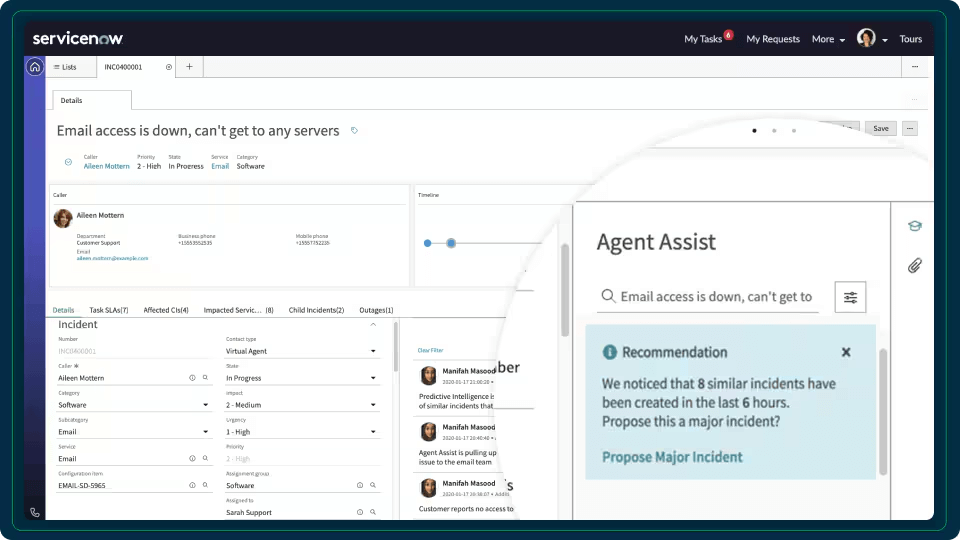
ServiceNow’s predictive intelligence features identify recurring customer requests, helping teams anticipate similar issues and put corrective measures in place.
Ever-more autonomous AI agents
AI agents use agentic intelligence to handle customer interactions. Unlike traditional chatbots, they deliver an experience that feels much closer to talking with a real person.
They can analyze complex situations, pinpoint the root of a problem, and choose the right fix. With every exchange, they learn from customers and pick up the conversation smoothly across any channel. They can also take action on their own, like adjust an order, issue a refund, schedule an appointment, or generate a document. Thanks to their ability to reason, learn, and execute, they’re set to become true partners to human agents by 2026.
For companies already ahead in this space, a key trend in 2026 will be shifting from generalist AI agents to multi-agent systems. Instead of relying on one agent for everything, organizations will deploy several specialized agents that work together. For example, one agent can receive, analyze, and route incoming requests to domain experts, all connected through an inter-agent communication system designed to handle complex cases.
Multimodal AI for stronger customer support
By 2026, AI won’t be limited to text. It will blend voice, images, and video into one seamless experience. Multimodal support is on track to become the new standard for smoother, more personalized interactions.
According to Zendesk’s CX Trends 2026 report, nearly 8 in 10 consumers say being able to share media makes support easier. Customers are especially open to using video for product return checks, troubleshooting technical issues, and installation help.
Voice AI is already gaining traction, and its adoption will accelerate. Voice agents can handle many simple calls with natural tone and near-human understanding. Voice also conveys emotions through word choice, tone, and rhythm. A frustrated or rushed customer can be detected instantly, allowing the AI agent to adjust its approach.
Visual AI lets systems interpret images, videos, or live camera feeds to detect objects, actions, or movements in real time. In customer service, it can automatically spot product defects, verify identity through image analysis, or run real-time remote diagnostics. This ability to "see" and understand visuals boosts accuracy, removes the need for customers to explain complex issues, and speeds up resolutions.
Together, these AI capabilities make support faster, more personalized, and more precise. An AI agent will be able to understand what a customer says, shows, and writes, then deliver tailored help. For example, a customer can describe an installation issue, show the product on video, and get an instant response suited to their exact situation. Interactions become fully multimodal, driving more efficient problem-solving.
AI–human collaboration is essential
AI creates real value when it amplifies human abilities instead of replacing them. Top-performing companies don’t automate at all costs; they combine the strengths of both to deliver a better customer experience. When AI handles routine requests, agents can focus on moments that require empathy, expertise, and creativity. The impact is clear: 65% of AI-enabled agents say they now have more time to build real relationships with customers.
A strong AI agent doesn’t try to solve everything on its own—it knows its limits. It gauges how complex a request is, senses the customer’s frustration level, and hands off the case to the right person at the right time. This intelligent escalation feels seamless: all context and history go directly to the human agent so the customer doesn’t have to repeat themselves. The ability to switch easily to a human is the top driver of trust in automated support, even ahead of first-contact resolution.
Human agents can also get real-time help from an AI copilot that suggests responses, surfaces the best solutions, and automates admin work during the conversation.

Artificial intelligence: the challenges in 2026
Despite major breakthroughs, adopting AI in customer service still comes with real challenges. A MIT study shows that 95% of corporate AI projects fail. The main issues are poor integration inside companies, tools that don’t learn from real interactions, weak connections to existing workflows, and internal resistance. You need to factor this in to build a successful strategy for 2026. Here are a few guidelines:
- Focus on usefulness, not hype: identify concrete problems to solve first (wait times, repetitive questions, team overload) before picking any AI solution.
- Start small: begin with one clear, simple, measurable use case instead of a full-scale rollout.
- Bring teams in early: involve them from the start to boost adoption and improve the tool over time.
- Make sure it’s reliable: pay close attention to the quality of AI responses to avoid hallucinations and misinformation.
- Stay transparent: explain how AI is used and always offer a human fallback.
- Track what matters: beyond classic KPIs, measure autonomous resolution without escalation, AI-specific CSAT, and handling time.
Improve your customer service with AI
Discover how AI tools enable human agents to deliver the best customer experience and tips for successfully integrating them into your customer service.
See the full guide2/ Personalization: striking the right balance
80% of consumers prefer brands that offer personalized experiences, and half of them spend more with those brands. On the business side, companies that excel at personalization are 48% more likely to exceed their revenue targets and 71% more likely to see a significant boost in customer loyalty.
But there’s a catch.
Only 48% of consumers feel brands actually deliver on their personalization promise. When brands overdo it, they cross into intrusive territory. 70% of consumers say brands send so many messages that they stop paying attention. And 34% have stopped buying from certain brands because of excessive outreach. In 2026, personalization still matters but it needs to be done the right way.
Key elements of effective personalization
1. Relevance first
50% of consumers find messages useful when they match their recent activity, not their entire history, but what they’ve done lately, in a specific context.
Example: A customer buys a printer. Wait a few days, then recommend three compatible ink cartridges. One message, three targeted suggestions, sent at the moment they’re starting to use the product.
2. Authentic and human
51% value messages that feel uniquely written or sent by a real person. Automation shouldn’t remove the human touch.
Example: Three months after adopting a software tool, the customer receives an email from their advisor: “Hi Mary, I noticed you’re using feature X a lot. Here are two tips that could save you time.” Short, signed by someone real, and genuinely helpful.
3. Put the customer in control
68% need to trust a brand before feeling comfortable with personalized messages. Trust comes from transparency.
Example: A complete preference center lets customers choose exactly what they want to receive: email frequency, types of content, preferred channels, preferred timing. They should also see why they’re getting a message (“Because you viewed this category”) and be able to turn anything off. The customer stops feeling tracked and starts feeling supported.
AI for smarter personalization
AI helps you decide what to say, when to say it, and, above all, when to stay quiet. It reads customer behavior in real time to spot signs of overload. It knows when someone is open to a message and when they’ve had enough. It understands context: a shopper comparing products for 20 minutes doesn’t need the same message as someone who abandoned their cart three days ago.
Use AI to:
- Anticipate needs. A customer keeps checking your help page but never contacts support? AI can trigger a proactive message before the issue grows.
- Optimize timing. A customer always opens emails in the morning but ignores push notifications? AI chooses the best moment and the right channel for each interaction.
- Adjust messaging. A customer shows signs of dropping off (fewer opens, quick deletions?) AI spots it and slows the frequency before you lose them.
The real value of AI isn’t in personalizing more, it’s in personalizing smarter. In 2026, personalization means showing customers you understand what they need, exactly when they need it.
Humanize your CX
Learn how Apizee's remote visual support solution helps you create personalised, human interactions while offering a seamless customer experience.
Get a demo3/ Omnichannel approaches remain key
Omnichannel isn’t new. It’s been on companies’ strategic roadmaps for years. Yet most still struggle to turn the vision into reality: 84% of CX leaders don’t offer multiple channels with fully integrated technology and seamlessly connected data. As a result, brands lack a clear, continuous view of customer interactions.
Customer expectations, however, are straightforward. They want to switch between channels without friction—whether live chat, email, social media, or phone—and receive the same high-quality experience every time. 74% of consumers say having to repeat themselves is extremely frustrating and see it as a sign that the brand doesn’t value their time or loyalty.
Omnichannel platforms help fix this. They bring all communication channels together in one place, making it easier to build smooth, connected customer journeys.
And then there’s AI. To work well, it needs a complete view of the customer. That requirement pushes companies to create a single source of truth, updated in real time across every channel. AI uses the customer’s full history to understand context, anticipate needs, and personalize every touchpoint.
Take this example: a customer emails the sales team, then asks a question on social media, and later calls support. They shouldn’t have to start from scratch each time. AI pulls all those interactions into the CRM so every agent has the full picture before picking up the conversation.
73% of agents say having all customer interactions in one place helps them do their jobs better. It gives them the context they need to resolve issues faster, avoid repetitive questions, and deliver a more personalized experience.
So yes, omnichannel still matters in 2026. But AI and omnichannel platforms are finally removing the roadblocks that held it back.
4/ Security and transparency to build trust
Consumers want personalization, but not at the cost of their data. Only 39% trust companies to handle their information responsibly, and nearly one in three feels uneasy about their data being used for personalization.
Growing skepticism toward AI
Concern rises as AI becomes more common. 53% fear their data could be misused in AI-driven tools. And they’re not wrong.
As AI spreads across companies, it brings new risks: data leaks, plus AI models themselves that hold large amounts of sensitive information and attract cyberattacks. Even Sam Altman, CEO of OpenAI, admits it: personalization is a major breakthrough, but it also opens a new door for cyberthreats. That doesn’t do much to reassure consumers.
Transparency as the answer
81% of consumers believe the way a company handles their personal data shows how much respect it has for them. The issue? 43% feel companies aren’t doing enough to protect their data online, and among them, 76% are unhappy with current transparency policies.
What people expect is clear:
- 76% want an easy way to opt out
- 75% want companies to adopt ethical AI governance programs
- 74% want more transparency around AI-driven decision-making
- 75% want a human involved at some point in the process
To rebuild trust, a few actions go a long way: explain clearly what data is collected, give users real control over its use, make deletion simple, communicate the security measures in place, and show how their data actually improves the customer experience.
The regulatory landscape is tightening
The coming years will bring major shifts in data privacy, driven in large part by stricter AI governance. Customers overwhelmingly support this direction: 73% believe government regulation of AI is essential to protect their online identity data. In 2024, the European AI Act marked a turning point as the first regulation dedicated specifically to artificial intelligence. Meanwhile in the United States, state-level privacy laws continue to multiply.
These regulatory changes will have real consequences. Forrester expects a 20% rise in class-action lawsuits related to AI-driven privacy violations. Lawyers are now going after AI applications directly.
By 2026, trust becomes the main driver of engagement. In a world where only 17% of consumers fully trust the organizations managing their identity, companies that invest in strong AI governance will be the ones building lasting customer relationships.
5/ Human interaction remains essential
After years of hearing about AI everywhere, a new trend is emerging: CX fatigue. People are growing frustrated with tech that’s supposed to make life easier but often does the opposite (clunky chatbots, doom loops…). What do they want? Real human contact.
Figures say it all:
- 87% believe no AI will ever replace human support in customer service (source)
- 88% are satisfied with interactions handled by humans, compared to 60% with AI (source)
- 75% prefer speaking with a person, especially for sensitive or complex issues (source)
This preference highlights a genuine need for empathy and authenticity, something AI still struggles to deliver.
Heading Toward a Human-Contact Requirement?
According to consumers, the top frustration with automated interactions is not being able to reach a real person: 47% cite this as their biggest pain point. In response, several initiatives are taking shape:
- "Keep Call Centers in America Act of 2025": Two U.S. senators have introduced a bill that would guarantee access to a human agent and help protect contact-center jobs in the United States.
- "Right to Talk to a Human": Gartner reports that the European Union is expected to add this right to its legislation within three years to curb excessive automation and ensure easy access to human support.
These rules aren’t in place yet, but companies have every reason to act now. To boost customer satisfaction, the option to speak with a person should be easy to spot and available from the start of the journey. By reducing effort and removing customers’ number-one frustration, businesses can get ahead of upcoming regulations and strengthen loyalty at the same time.
Video calls to humanize customer service
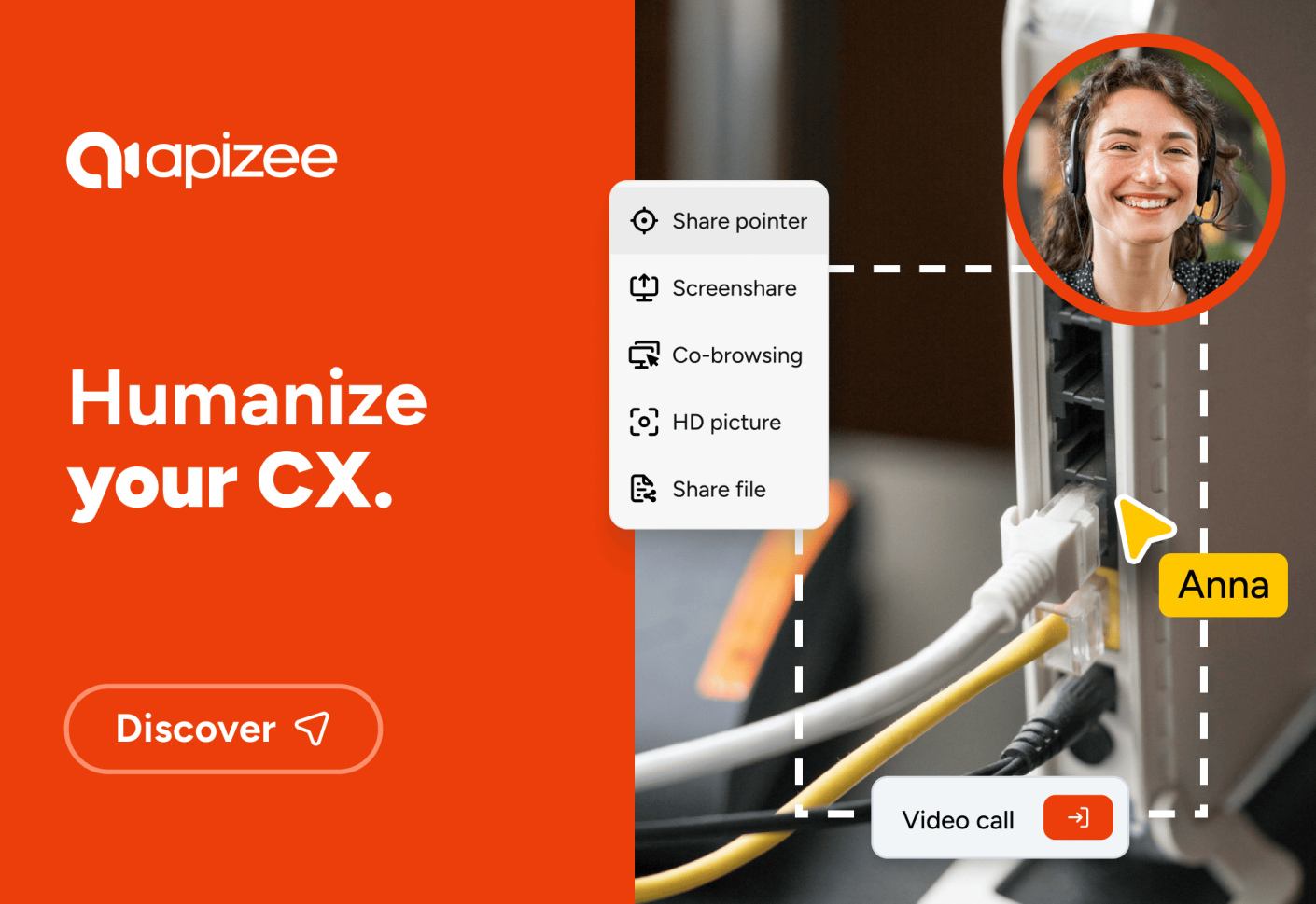
To get the most out of real human interactions and strengthen the relational side of customer service, companies are increasingly turning to remote visual support. By blending digital efficiency with the warmth of human contact, video chat is particularly effective in providing a personalized, high-quality customer experience.
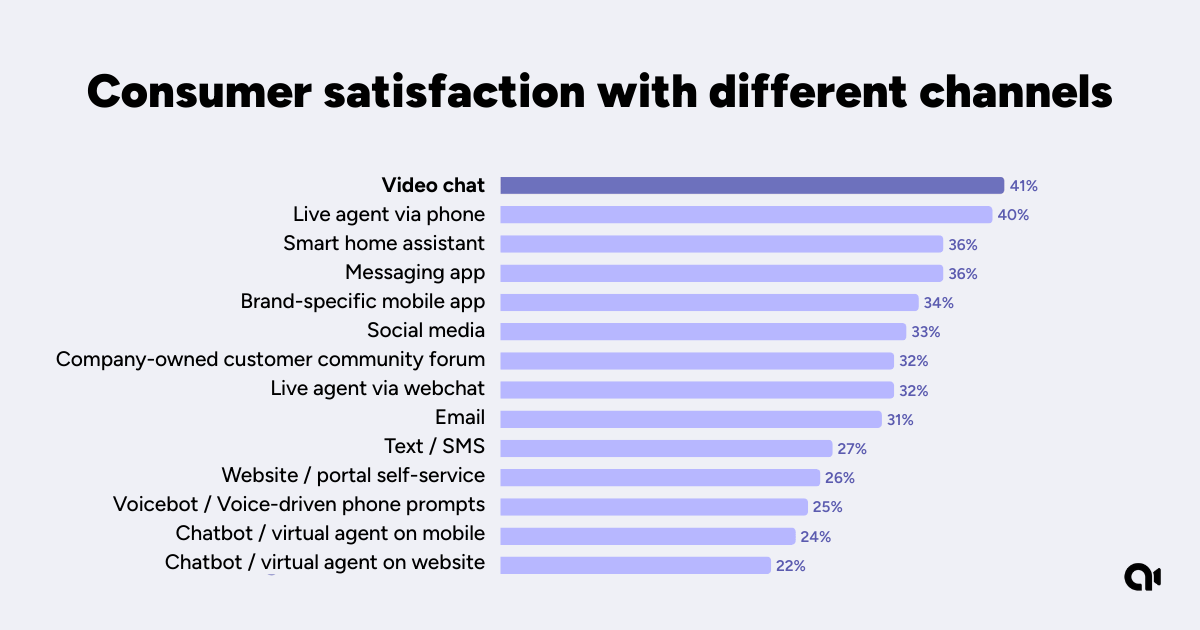
It helps teams troubleshoot complex problems faster and more effectively, which boosts customer satisfaction. It also builds a sense of closeness and trust between brands and their customers. With face-to-face interaction companies can create a more personal, empathetic connection, even from a distance. Video support will continue to expand in customer service in 2026 as a reliable way to guide and support customers.
6/ Employee experience at the heart of priorities
It's nothing new that the customer service profession is facing a major crisis. Companies are struggling to attract candidates and, more importantly, to retain their talent: in just one year, 12% of agents have left their positions. This reflects a deeper issue, as agents often feel overworked, unsupported, and undervalued. For companies, these departures represent a significant loss.
There is a correlation between customer satisfaction and employee experience, known as the "Symmetry of Attention". This concept involves placing customer relationship quality and employee relationship quality at the same level to increase employee engagement and customer satisfaction. According to McKinsey, individuals who report a positive employee experience have an engagement level 16 times higher than those with a negative experience. It is therefore crucial for companies to place employees at the heart of their organization.
In 2026, companies will need to increase their focus on customer service agents to promote workplace well-being in order to build lasting customer relationships, driven by engaged teams.
Where to start?
First, it's essential to understand what agents expect from their company. Top expectations include hybrid work models that allow for a better work-life balance. Professionally, they're looking for meaning in their work, like feeling useful, having an impact on customer satisfaction, and contributing to service improvement. They also seek greater recognition and career growth opportunities.
To meet these expectations, companies must rethink their approach. This starts with an optimized work environment featuring high-performing business tools such as CRM, call software, knowledge bases, and video support to make daily work easier. As for AI-based tools, companies should view them as support rather than replacement. Agents’ roles are to supervise, guide, and enhance AI systems while providing what technology cannot: empathy, judgment, and creative problem-solving. However, according to a Miro study, 54% of employees struggle to know when and how to use AI effectively, leading to frustration and a sense of incompetence.
That's why companies must also invest in continuous training for agents: mastering new technologies, especially AI; ongoing product and service training to strengthen technical skills; and developing soft skills such as empathy and conflict management.
From ROI to ROT
A new metric is emerging: ROT (Return on Time), which emphasizes the time given back to employees and customers rather than just cost savings.
Time is becoming as valuable as money. Shaving a few seconds off a call or automating a repetitive task can have an great impact at the customer service level.
This could look like:
- An AI agent that qualifies requests and retrieves information before transferring to an advisor. The agent spends less time on low-value tasks and has more availability to solve the customer's problem.
- A video call that enables remote diagnosis and problem resolution. This eliminates a technician dispatch, reduces resolution time, and improves customer satisfaction.
- A knowledge base or FAQ that answers simple questions without involving customer service. Agents can dedicate their time to requests that truly require human interaction.
It's no longer about optimizing costs, but understanding what each saved minute enables: more availability and active listening, more effective problem resolution, less stress for support teams, and higher customer satisfaction. Measuring ROT aligns performance with satisfaction by centering the scarcest resource: time.
In 2026, companies that free up time, streamline tools, and invest in their teams will gain a lasting advantage built on engagement, performance, and satisfaction—for both employees and customers.
7/ Customer service: a driver of loyalty and profitability
While price often remains the top consideration for consumers, 82% believe a company stands out through the quality of its customer service. And the consequences of poor customer service are immediate and costly:
- 1 in 2 customers reduce their spending after a bad experience (source)
- 45% leave a brand due to bad customer service (source)
- 85% of leaders say customers will abandon a brand if their issue isn't resolved on the first contact (source)
Given these stakes, companies that neglect their customer service risk losing revenue while also damaging their reputation.
Putting customer service at the heart of your organization
Customer service is the primary touchpoint consumers have with a brand. It's therefore essential to connect it with the rest of the company and foster collaboration across different departments. When support identifies a recurring pain point or when a bug is blocking multiple customers, information needs to flow and the relevant teams must act quickly. By facilitating internal collaboration around customer success, companies can improve the experience they deliver, strengthen customer loyalty, and drive business growth.
As for agents, they play a crucial role. Their human skills—managing frustration, offering personalized solutions, and mastering active listening—remain irreplaceable and represent a real competitive advantage. AI can handle volume, but it will never defuse an angry customer the way a skilled agent can.
Viewing customer service as a true profit center
By leveraging customer service strategically, a company can transform it into a genuine profit center. Here are three key drivers for generating revenue through customer service:
- Customer retention. Retaining a customer costs 5 times less than acquiring a new one. A 5% increase in customer retention rate can boost profits by 25%. An existing customer is 60-70% more likely to make a purchase than a new prospect.
- Identifying and resolving pain points. Agents are on the front lines to identify recurring pain points. They can escalate this valuable information, enabling the company to address these bottlenecks, improve the product or service, and reduce future support requests. This allows agents to focus on higher-priority customer needs and handle more high-value cases.
- Driving sales growth. Support teams guide customers throughout their entire journey—from product discovery through purchase and post-purchase. Thanks to their close relationships with customers, they're perfectly positioned to spot sales opportunities and execute upselling or cross-selling: identifying needs during conversations or suggesting complementary solutions tailored to the customer's context at just the right moment.
By 2026, how you treat your customers has become your primary differentiator. Your customer service is the face of your brand: every interaction directly impacts customer loyalty, revenue, and your bottom line.
What CX influencers think about 2026’s emerging trends
To get a clearer view of where customer experience is heading in 2026, we spoke throughout the year with experts who deal with these shifts every day. These professionals, featured in our list of the top 100 CX influencers in Europe, shared their take on the trends that will reshape the industry. Here’s what they expect in the months ahead.
Katie Stabler
Founder – CULTIVATE
I hope it's 'keeping the human and in an increasingly disconnected world'.
Giulio Castiglioni
Customer Care Director – Playtomic
AI is clearly the most transformative trend shaping both the SaaS and B2C marketplace worlds. It is already a game changer, and its impact will only grow.
- For customer care agents, AI is becoming a real-time assistant. It helps surface the right answers faster and allows agents to focus more on the user’s needs.
- For end users, AI unlocks instant access to answers and enables smooth self-service.
In short, AI is not replacing the human touch. It is enhancing it, allowing us to deliver smarter support and connect more meaningfully when it matters most.
Adrian Swinscoe
Advisor, author, and workshop facilitator
There are the usual suspects…technology, artificial intelligence, competition, customer behaviour. But the danger of always following or focusing on trends is that we lose sight of what is important.
- Followers get caught up in what the future holds and fail to realise they jeopardise their future if they do not deliver today.
- Leaders know they need to pay attention to future trends but also know that delivering a great customer experience today is the foundation on which their future sits.
The future of CX is always built in the present.
Declan Ivory
VP Customer Support – Intercom
The biggest trend is AI without a doubt.
- We will quickly move to where almost all initial customer engagement will be via an AI Agent. This will cover almost all aspects of a customer journey. A customer will deal with an "engagement" AI agent, and if it cannot address the issue it will work out which human should be involved.
- AI driven insights will transform how anyone involved with customer experience works. AI can extract insights from all customer interactions. These insights enable more personalised, contextual, and proactive engagement, can trigger proactive outreach, and enrich both the AI Agent and human engagement. These insights empower people to think and work differently and provide a higher value experience.
Simon Macklin
Senior Vice President - Customer Success EMEA – Salesforce
- Data, Data, Data!
- Breaking down siloes
- Agentic AI (taking action)
- Failing fast (iterative approach rather than making things perfect)
Claire Boscq
CX Activator and founder – JCX Alliance
I see three big shifts shaping the future of customer eXperience:
- Wellbeing-led CX
More businesses are recognising the direct link between employee wellbeing and customer satisfaction. Happy, engaged teams create memorable experiences. - Experience as community
We’re moving beyond brand loyalty into a deeper sense of belonging. CX is no longer just about transactions. It’s about connection and building communities where customers feel seen and valued. - Purpose over process
Customers today want more than just good service. They want to support brands that care, act ethically and make a positive impact.
The future of CX is heart-led, not just tech-led.

Boost your customer service in 2026 with Apizee
By 2026, businesses will need to strike a delicate balance between artificial intelligence—which enables optimized and personalized interactions—and human expertise, which brings the empathy and creativity essential for creating lasting connections. Key focus areas for companies will include delivering personalized service, increasing operational efficiency, exceeding customer expectations, and maximizing employee experience. These strategic investments will be crucial for optimizing customer service.
Go further
Implementing visual engagement solutions, such as remote visual support, can help you achieve your business objectives. At Apizee, we offer 100% web-based, secure solutions developed with the highest standards of quality and data protection.
Contact us